2026 Hyundai Santa Fe SE vs. 2026 Hyundai Santa Fe SEL


The 2026 Hyundai Santa Fe is a three-row midsize SUV with a boxy, upright shape built around passenger and cargo space. Shoppers looking at the start of the lineup usually land on the same question: how does the SE compare to the SEL? Both trims share the same powertrain choices, seating for seven, and a long list of standard driver-assistance features. The differences come down to comfort, convenience, and connectivity upgrades. This guide lays out what each trim includes so you can decide which one matches the way you drive.

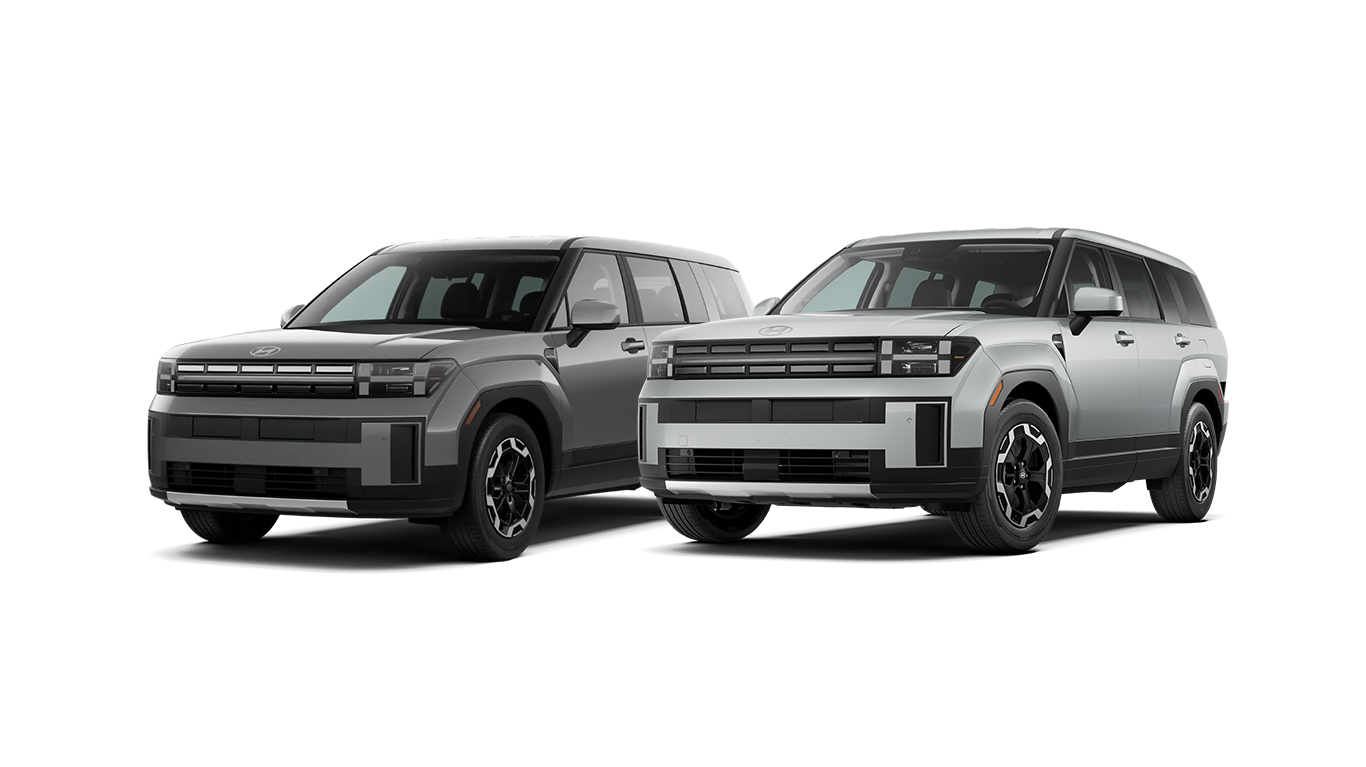
2026 Hyundai Santa Fe SE vs. SEL at Washington Hyundai in Washington, PA | Grey and silver 2026 Hyundai Santa Fe's side by side

Performance

The SE and SEL share the same mechanical hardware, so with the same powertrain and drivetrain, the two trims drive alike. The standard engine is a turbocharged 2.5-liter four-cylinder producing 277 horsepower and 311 lb-ft of torque. For 2026, gas models pair that engine with a conventional eight-speed automatic transmission in place of the previous dual-clutch unit. Front-wheel drive is standard on both trims, and HTRAC® all-wheel drive is available on both.

Drivers focused on efficiency can choose the Santa Fe Hybrid in either SE or SEL form. It pairs a turbocharged 1.6-liter four-cylinder with an electric motor for a combined 231 horsepower and 271 lb-ft of torque, routed through a six-speed automatic transmission.

Gas models carry EPA estimates of 20 mpg city, 29 mpg highway, and 24 mpg combined with front-wheel drive, or 20/28/23 mpg with all-wheel drive. Hybrid models are rated at up to 37 mpg city, 36 mpg highway, and 36 mpg combined with front-wheel drive, and 35/34/34 mpg with all-wheel drive. Gas-powered SE and SEL models can tow up to 3,500 pounds with trailer brakes, while hybrid versions are rated for up to 2,000 pounds. Trailer pre-wiring and Trailer Sway Control are standard on both trims.

With identical powertrains, choosing between the SE and SEL is a question of features rather than performance.


Design & Comfort

From the outside, the two trims look nearly identical. Both ride on 18-inch alloy wheels and share LED projector headlights, LED taillights, heated side mirrors, and a Hands-Free Smart Liftgate with auto open and adjustable height. The SEL adds black roof rails and side mirrors with integrated LED turn signal indicators.

Inside, the SE features YES Essentials® stain-resistant cloth seats, a practical choice for households with kids, pets, or outdoor gear. The SEL steps up to H-Tex® leatherette upholstery and adds heated front seats along with an 8-way power driver’s seat with 2-way lumbar support, where the SE uses a 6-way adjustable driver’s seat. The SEL also adds auto up/down function for both front windows, while the SE provides it for the driver’s window.

Climate comfort is another point of difference. Both trims include second-row air vents, while the SEL adds third-row vents and dual-zone automatic temperature control. On the SE, dual-zone automatic temperature control is standard on the hybrid model only.

Space is the same in both trims. Each seats seven, with a 60/40 split second-row bench that folds flat and reclines, plus a 50/50 split third row. Cargo capacity measures 14.6 cubic feet behind the third row, 40.5 cubic feet behind the second row, and 79.6 cubic feet with both rear rows folded.

 
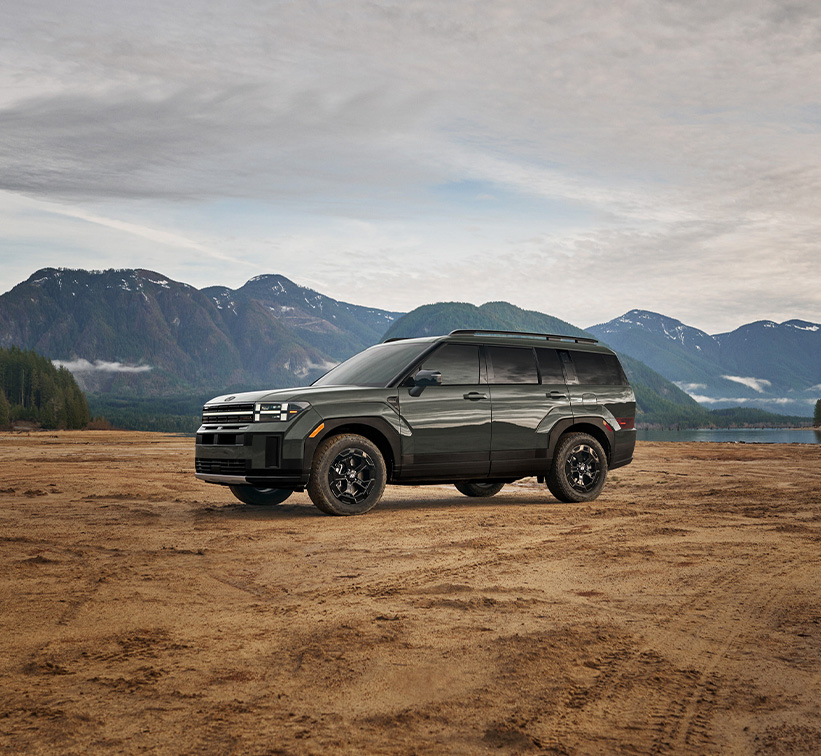
2026 Hyundai Santa Fe SE vs. SEL at Washington Hyundai in Washington, PA | Green 2026 Hyundai Santa Fe parked with views of the mountains in the background

Technology & Safety


Both trims share a 12.3-inch touchscreen display with wireless Apple CarPlay® and Android Auto™, a 4.2-inch color multi-information display, the Bluelink® Connected Car System, over-the-air update capability, Rear Seat Quiet Mode, and proximity key entry with push-button start and remote engine start. The SEL builds on that foundation with wireless device charging, two additional high-power USB charge ports for third-row passengers, and Hyundai Digital Key 2.

On the safety side, the SE and SEL come standard with a long list of driver-assistance technology, including:

  • Forward Collision-Avoidance Assist with Pedestrian, Cyclist, and Junction Turning Detection
  • Blind-Spot Collision-Avoidance Warning
  • Rear Cross-Traffic Collision-Avoidance Assist
  • Lane Keeping Assist and Lane Following Assist 2
  • Smart Cruise Control with Stop & Go
  • Safe Exit Assist
  • Driver Attention Warning
  • Park Distance Warning, Forward and Reverse
  • High Beam Assist
  • Rearview monitor with parking guidance

The SEL adds Forward Attention Warning, a driver monitoring system, and upgrades the SE’s door-logic Rear Occupant Alert to Advanced Rear Occupant Alert, which adds a radar sensor and Bluelink integration. Both trims include a driver’s knee airbag, first- and second-row side airbags, and side curtain airbags.

Choosing Between the SE and SEL

The Santa Fe SE may be the right fit if:

 
  • You want the full 2026 Santa Fe powertrain lineup, seating for seven, and standard driver-assistance technology
  • Stain-resistant cloth seats suit a household with young kids, pets, or muddy gear
  • Your third row is used occasionally rather than every day

The Santa Fe SEL may be the right fit if:

 
  • You want heated front seats, a power driver’s seat, and leatherette upholstery
  • Third-row passengers ride regularly and would use their own air vents and USB ports
  • Wireless charging, Hyundai Digital Key 2, and dual-zone automatic climate control are on your list
  • You would like the added monitoring of Forward Attention Warning and Advanced Rear Occupant Alert

Whether the SE or SEL fits your routine better, the 2026 Hyundai Santa Fe delivers three-row space, a choice of gas or hybrid power, and standard driver-assistance technology. The simplest way to feel the difference between the two trims is to sit in both. Visit Washington Hyundai in Washington, PA to explore the 2026 Santa Fe lineup and schedule your test drive.