2026 Honda CR-V vs. 2026 Toyota RAV4 vs. 2026 Hyundai Tucson
The compact SUV segment is one of the most competitive in the automotive world, and three names consistently rise to the top of every shopping list: the 2026 Honda CR-V, the 2026 Toyota RAV4, and the 2026 Hyundai Tucson. Each brings a strong package of performance, technology, and comfort to the table, and each has earned its loyal following. But when you stack them side by side across every category that matters, one emerges as the clear choice for drivers who want the complete package. Read on to find out which compact SUV earns the top spot.
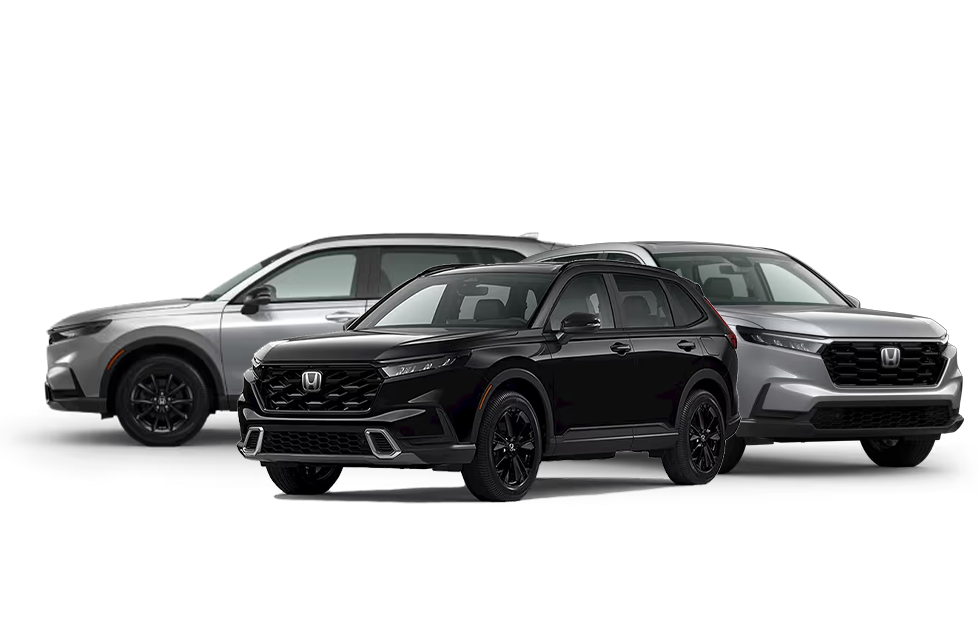
Performance
When it comes to powertrain flexibility, the 2026 Honda CR-V offers something that neither the RAV4 nor the Tucson can fully match: the freedom to choose. Gas-powered CR-V trims are equipped with a turbocharged 1.5-liter four-cylinder engine producing 190 horsepower and 179 lb-ft of torque, paired with a smooth CVT. Drivers who want maximum efficiency can step up to the CR-V Hybrid, which combines a 2.0-liter four-cylinder with a two-motor hybrid system for 204 horsepower and up to 43 mpg city on front-wheel-drive trims. For adventure seekers, the all-new TrailSport Hybrid brings all-terrain tires and trail-tuned software to the mix, making the CR-V the most versatile option in this three-way comparison.
The 2026 Toyota RAV4 takes a bold swing by going hybrid-only, eliminating its gas-engine lineup entirely. The RAV4 HEV delivers 226 horsepower with front-wheel drive or 236 horsepower with AWD, and fuel economy of up to 47 mpg city on front-wheel-drive trims is genuinely impressive. The available plug-in hybrid pushes output to 324 combined horsepower with a manufacturer-estimated 52-mile all-electric driving range on SE and XSE trims. Towing capacity reaches 3,500 pounds on properly equipped AWD and PHEV models. These are real strengths, but going hybrid-only removes choice from the equation, which is a meaningful trade-off for buyers who prefer a conventional gas option for simpler ownership.
The 2026 Hyundai Tucson rounds out the group with a 2.5-liter four-cylinder producing 187 horsepower in standard gas trim, stepping up to 231 horsepower in hybrid configuration. Towing capacity increases to 2,750 pounds with trailer brakes for the 2026 model year. While the Tucson Hybrid returns a solid 38 mpg combined on the Blue SE trim, it falls short of the CR-V Hybrid's city fuel economy lead. Across all powertrain options, the CR-V gives drivers the broadest set of choices and the strongest hybrid efficiency numbers in daily city driving.
The 2026 Honda CR-V continues its award-winning formula with a refined, athletic exterior and a spacious, thoughtfully designed cabin. Its signature vertical taillights bring modern LED character to every angle, and dual chrome exhaust finishers on hybrid trims add a sport-inspired finishing touch. Inside, the cabin prioritizes practicality without sacrificing style, offering an easy-access cargo area and a flexible rear seat that accommodates both passengers and gear with equal ease. The available power tailgate with programmable height on upper trims makes the CR-V genuinely practical for everyday use.
The 2026 Toyota RAV4 arrives with a thoroughly redesigned exterior, built around Toyota's hammerhead front-end design and a wide, fender-flared stance that communicates confidence. The cabin features a 12.3-inch digital gauge cluster standard across all trims and 37.8 cubic feet of cargo space behind the rear seats. Premium touches like SofTex seating and available panoramic sunroof are available on upper trims. The design is bolder and more distinctive for 2026, though the hybrid-only approach means buyers who prefer a lighter, simpler gas vehicle will need to look elsewhere.
The 2026 Hyundai Tucson sports a cleaner, more refined exterior compared to its predecessor, with smoother lines and a more upscale interior that features fewer physical buttons and a more modern layout. With 38.7 cubic feet of cargo space behind the rear seats, the Tucson holds its own in interior practicality. Interior materials range from cloth on entry trims to genuine leather on the Limited, giving buyers clear upgrade paths. The CR-V's broader range of adventure-focused trims, including the TrailSport Hybrid, gives it a design and capability identity that neither the RAV4 nor the Tucson fully replicates in a single model lineup.
Design & Comfort
Technology
All 2026 Honda CR-V trims come standard with a 9-inch touchscreen, wireless Apple CarPlay® and Android Auto™, and a Qi wireless charging pad. The standard wireless charging across the entire CR-V lineup is a meaningful advantage over competitors that reserve this feature for higher trims. The top Sport Touring hybrid trim offers an available Bose 12-speaker premium audio system for the highest-fidelity listening experience in the lineup. The 2026 updates also bring HondaLink connectivity features and multiple USB-C ports throughout the cabin to keep every passenger powered up.
The 2026 Toyota RAV4 delivers a strong tech package, with a 12.3-inch digital gauge cluster standard and an available 12.9-inch multimedia touchscreen on upper trims. Wireless CarPlay and Android Auto come standard, and Toyota's Arene software platform enables faster voice assistant response and integrated navigation in the gauge cluster. The available JBL 11-speaker audio system is a genuine highlight on upper trims. The RAV4's tech suite is well-executed, though the larger screen is reserved for higher trim levels rather than offered broadly across the lineup.
The 2026 Hyundai Tucson brings a standard 12.3-inch touchscreen across all trims, wireless smartphone connectivity, and an available Bose premium audio system on select trims. Hyundai Digital Key 2 is available on upper trims, and 110-watt USB-C ports are offered across multiple rows on select configurations. The Tucson's tech is genuinely competitive, though wireless charging is available rather than standard across the lineup. The CR-V's delivery of wireless charging and a robust Honda Sensing tech suite as standard across every trim gives it a broader technology baseline for more buyers without requiring an upgrade.
Safety
Every 2026 Honda CR-V comes standard with the full Honda Sensing® suite of driver-assist technologies, including:
- Collision Mitigation Braking System (CMBS)
- Road Departure Mitigation (RDM)
- Adaptive Cruise Control with Low-Speed Follow
- Lane Keeping Assist System (LKAS)
- Traffic Sign Recognition
- Auto High-Beam Headlights
Upper CR-V trims add Blind Spot Information, Cross Traffic Monitor, front and rear parking sensors, and Low-Speed Braking Control. Honda’s commitment to making Honda Sensing standard on every single trim, not just mid-level and above, is one of the most consumer-friendly safety decisions in the segment.
The 2026 Toyota RAV4 debuts Toyota Safety Sense 4.0, the brand’s most advanced driver-assist suite, which is standard on every trim. TSS 4.0 features updated hardware and detection systems powered by the Arene software platform, including enhanced pre-collision detection, lane-tracing assist, and road sign assist. The RAV4 also offers an available digital rearview mirror and a 3D Panoramic View Monitor on the Woodland trim. Toyota’s safety technology is genuinely excellent for 2026, and the RAV4 and CR-V are closely matched in this category at the standard level.
The 2026 Hyundai Tucson includes Hyundai SmartSense driver-assist technology standard across the lineup, covering Automated Emergency Braking with Pedestrian Detection, Lane Departure Warning, Lane Keeping Assist, Smart Cruise Control, Blind-Spot Collision Warning, and Rear Cross-Traffic Collision-Avoidance Assist. The Tucson also benefits from Hyundai’s segment-leading warranty coverage, including a 5-year/60,000-mile new vehicle limited warranty and a 10-year/100,000-mile powertrain limited warranty. While the Tucson's safety tech is comprehensive, the CR-V’s long-standing Honda Sensing reputation and consistent standard safety equipment across every trim level continue to make it one of the most trusted names in compact SUV safety.
The Verdict: 2026 Honda CR-V Is the Clear Choice
After comparing performance, design, technology, and safety across all three vehicles, the 2026 Honda CR-V stands out as the best all-around compact SUV in this group. It delivers the broadest powertrain lineup, offering both a turbocharged gas engine and a capable hybrid system, so drivers are never forced into a single electrification path. Its CR-V Hybrid delivers a strong 43 mpg city on FWD trims, outpacing the Tucson Hybrid's 38 mpg city, and the new TrailSport Hybrid adds off-road credibility that neither the RAV4 nor the Tucson can match in a single trim. Honda Sensing is standard on every CR-V, wireless charging is standard on every CR-V, and the cabin is purpose-built for real-world daily use. Recognized as a seven-time Car and Driver 10Best Trucks and SUVs award winner, the CR-V’s track record of excellence backs every reason to choose it.
The Toyota RAV4 is a strong performer with an impressive hybrid-only lineup and advanced technology, and the Hyundai Tucson brings standout warranty coverage and competitive interior space. But when flexibility, efficiency, technology standard-equipment, and proven reliability all come together in one vehicle, the 2026 Honda CR-V is the clear winner.
Visit Washington Honda in Washington, PA to explore the 2026 Honda CR-V lineup and schedule your test drive today.